Astra 6.2 vs Sol 6.2 for 3D modeling
I gave Astra 6.2 and Sol 6.2 the same spaceship reference and Blender prompt. Astra 6.2 was the winner.
I wanted to see how well OpenAI’s new models could build a 3D asset for a game. The assignment for Astra 6.2 and Sol 6.2 was a spaceship in Blender, with Unreal Engine 5 as the destination. How closely would each follow the design, and how much work would I have left before I could put its ship in a level?
I decided to create a reference sheet first. With the same drawings and dimensions in front of both models, I could put their ships side by side and judge details as specific as the slope of the cockpit or the space inside a wing.
Making the reference sheet
I asked Codex to use ImageGen to design the ship and draw the sheet.
$imagegen design a cool looking 3D sci-fi spaceship and generate a model sheet. The model sheet will be used as a reference to create a 3D model of the spaceship. Include scale and dimensions.
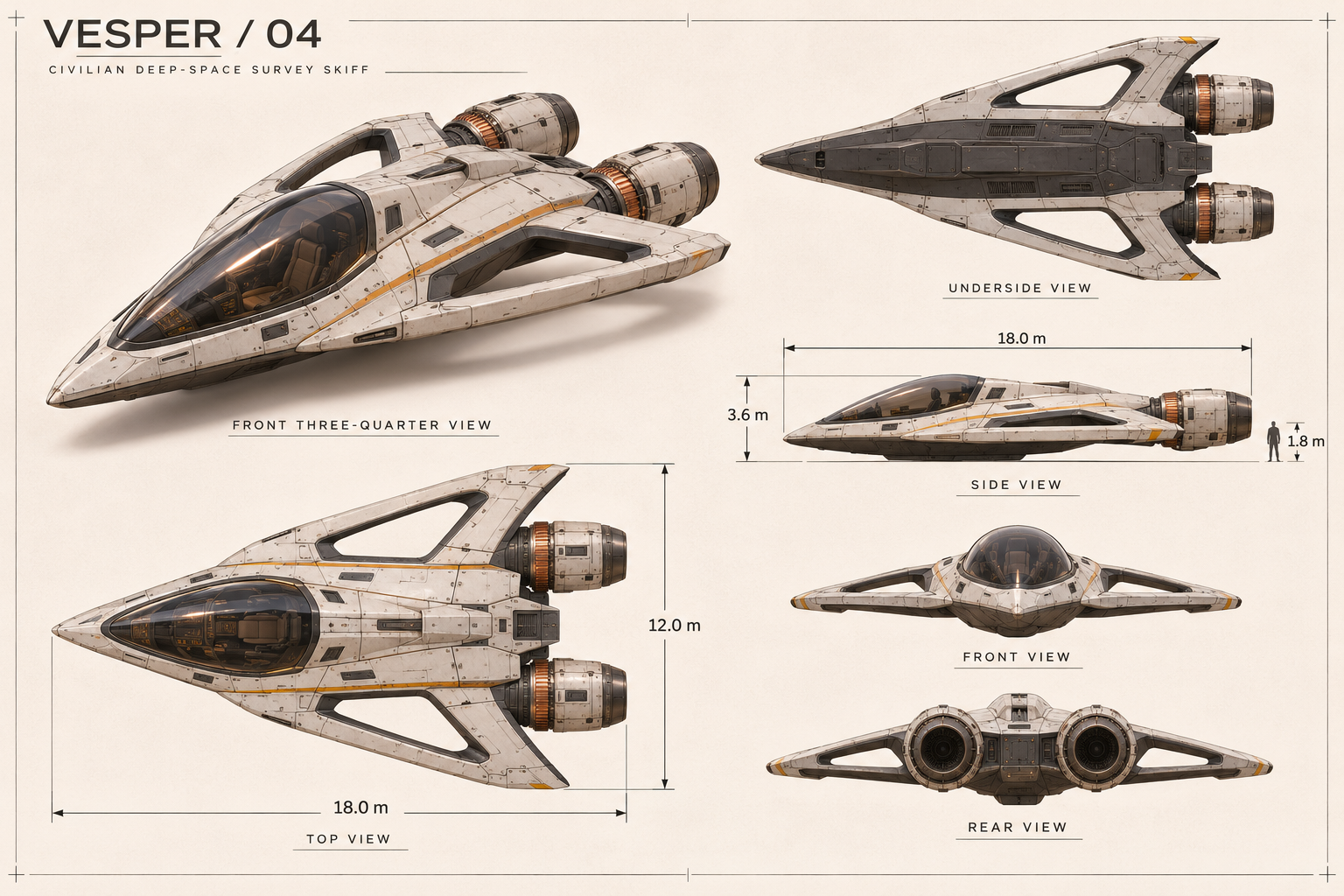
ImageGen came back with the Vesper / 04, an 18-meter civilian survey skiff. In the top view, you can see daylight between the fuselage and each swept outrigger. The side view shows how those same spars fit between the glass canopy and the shallow keel. The drawings vary in size on the illustrated sheet. The printable version puts all five orthographic views at a common scale.
The prompt for Astra and Sol
I gave Astra 6.2 and Sol 6.2 one run each, both with reasoning set to Xhigh. I attached the reference PNG to this request in both chats.
Use the Blender MCP to build a 3D model of the Vesper / 04 from the model sheet. Match the orthographic views and keep it 18 m long, 12 m wide, and 3.6 m high.
Your work output should follow Unreal Engine 5 best practices and the highest standards for 3D video game modeling for production assets.
I specified the dimensions and asked for a production asset. I left the camera distance, the number of ships on screen, and the hardware budget open.
Compare the two models
Drag either ship to rotate both, and scroll or pinch to zoom. Choose Side to compare the cockpit profiles or Rear to look into the twin drives. Open the larger viewer · Astra’s five still views · Sol’s five still views
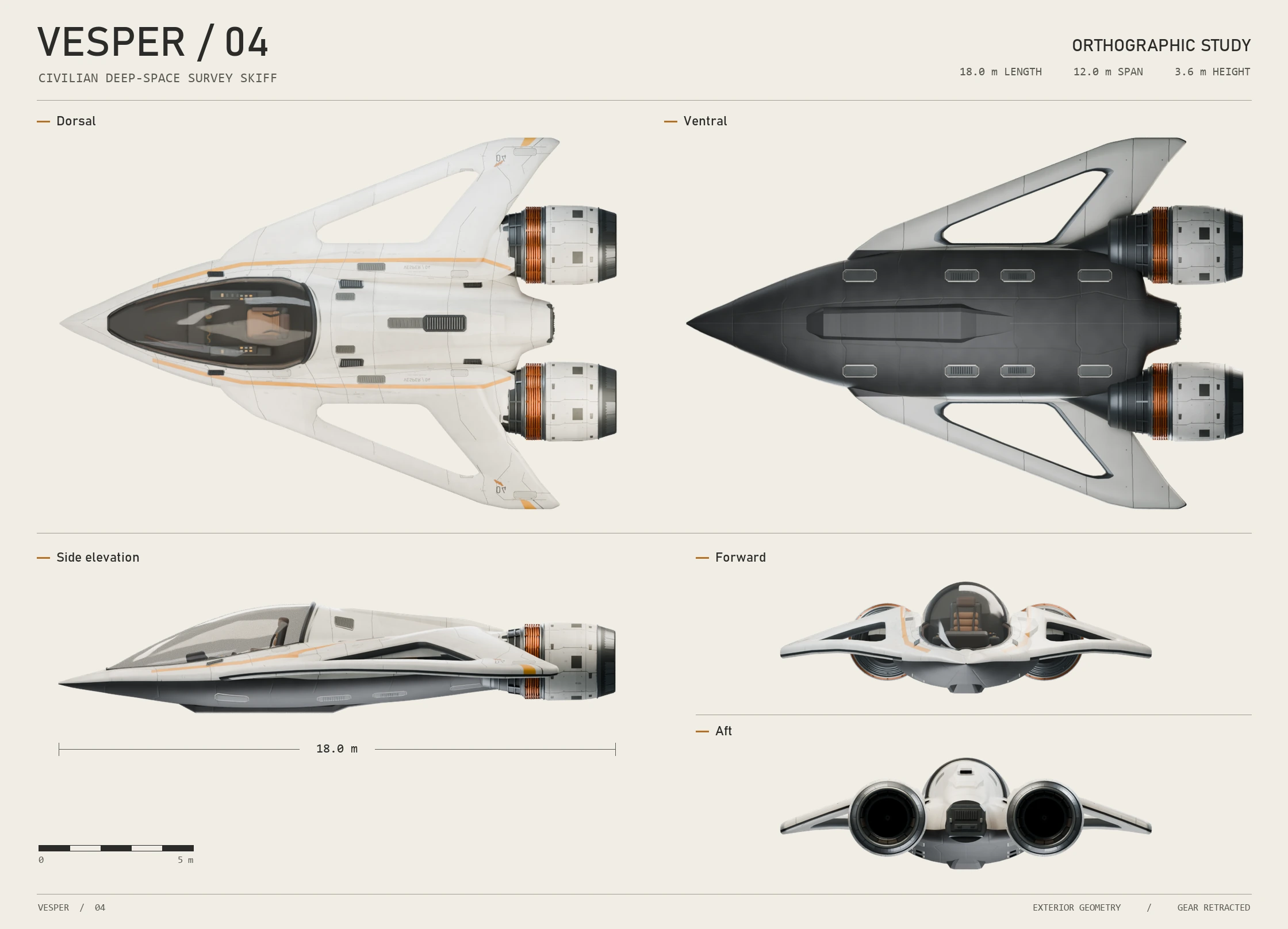
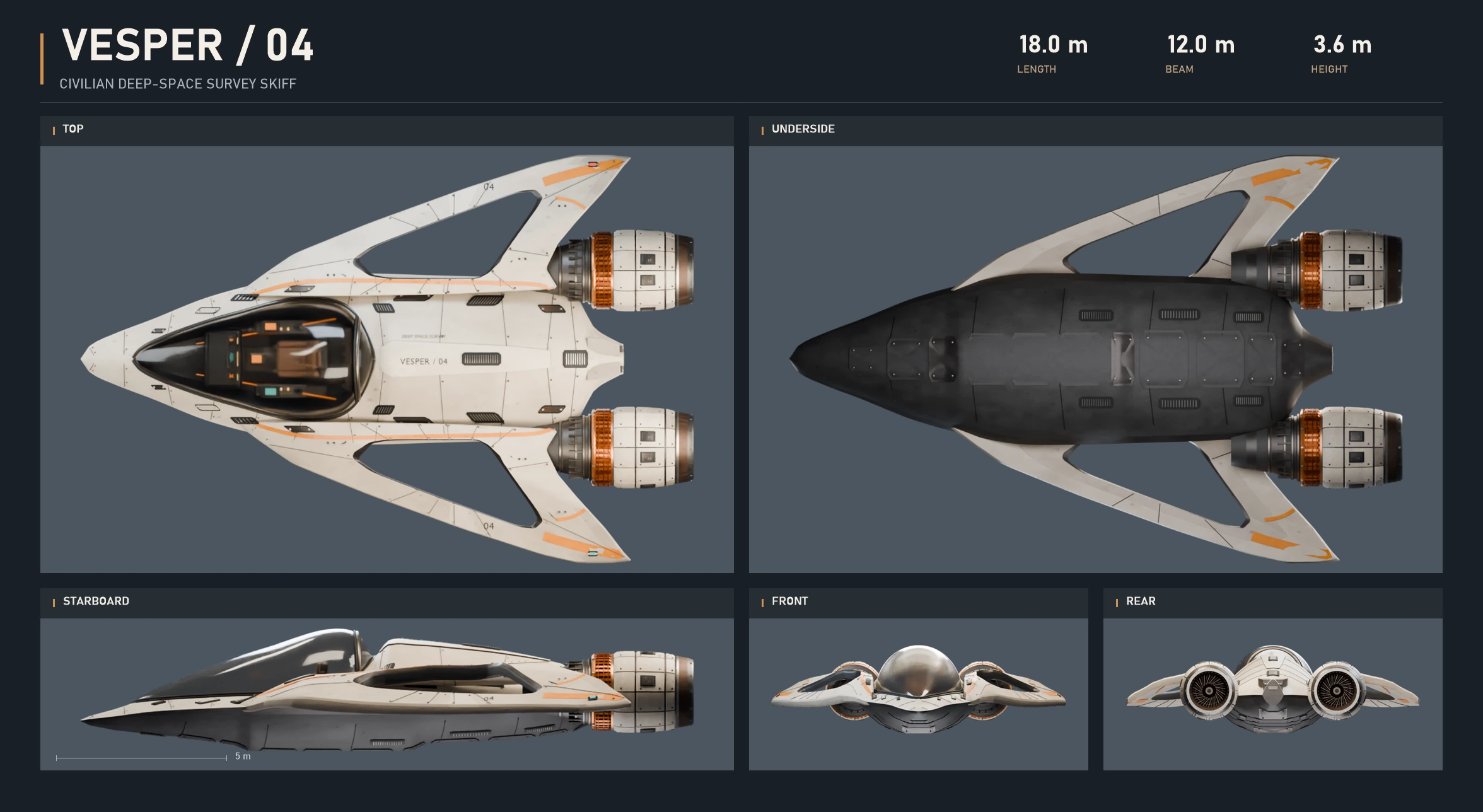
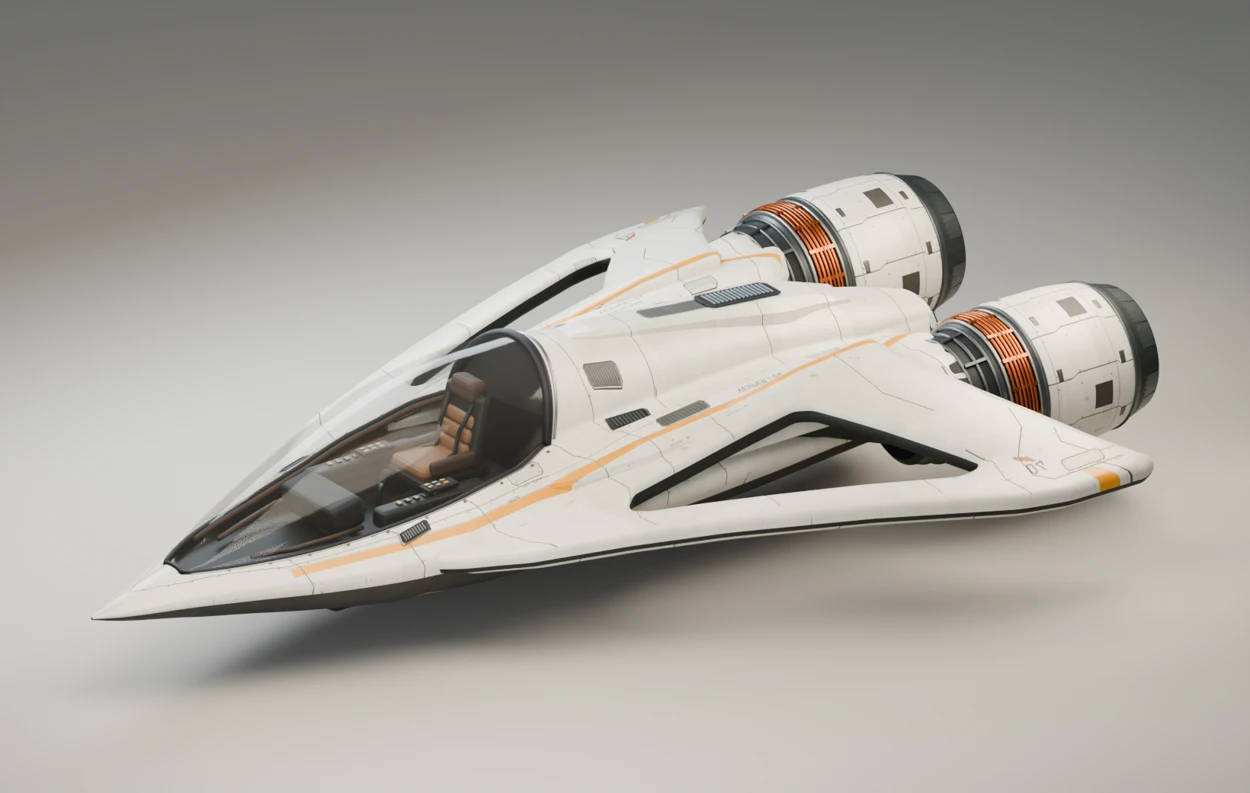
The viewer uses each Blender build’s LOD0 geometry, a shared orthographic camera, and the same lighting on both ships. The browser copies have compressed geometry and half-resolution textures. Each run also produced a studio render with its own lighting. Astra studio render · Sol studio render
Why I prefer Astra’s ship
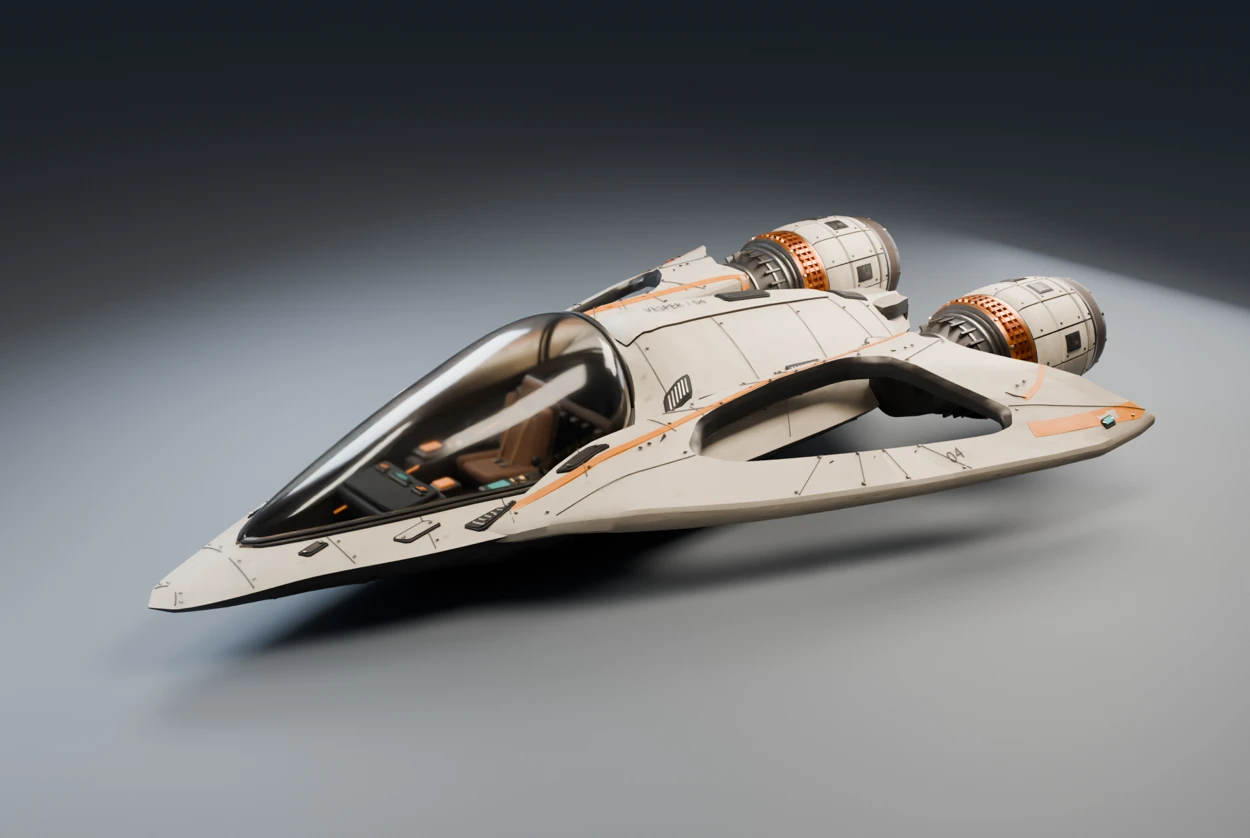
The cockpit profile is what puts Astra ahead for me. On the sheet, the roof of the cockpit slopes back into the deck in one continuous line. Astra keeps that line. Sol leaves a step just behind the glass that breaks the silhouette.
From above, Astra’s nose comes to a fine point. A thin amber stripe follows each shoulder, and the copper engine collars stand out against the white plating. Through the lightly tinted canopy you can see the pilot’s seat. Sol rounds off the nose and gives the glass a stronger reflection, with amber instruments visible underneath.
Sol does a better job with the wear on the ceramic panels. The chipped orange wingtips and seams sell the “used and repairable” finish in the reference brief, especially up close. I’d take that treatment as a reference for a texture pass on Astra’s hull. Astra is the ship I’d keep for its shape, and it delivered that shape with less than half the triangles.
What’s left to get each ship into a game?
Astra’s ship is ready to place in an Unreal level as a hangar prop. Its roughly 42-minute run included setting up the materials and checking scale and collision in the engine. Sol’s 33-minute run ended with a model it had checked in Blender. To use that ship in the same scene, I’d still need to import it, set up its materials, and verify its scale and collision in Unreal.
To make either ship playable, I’d still need to connect it to the game’s flight controls and test it on target hardware.
Geometry and texture budgets
I’d favor Astra for a fleet shot because its geometry savings add up with every ship in view. Sol’s texture maps cover fewer pixels overall. Neither run measured frame time or texture memory on target hardware, so I’d profile both ships in the same flyby before drawing a conclusion about performance.
| Delivered asset | Astra 6.2 | Sol 6.2 |
|---|---|---|
| LOD0 triangles | 74,489 | 157,768 |
| LOD1 triangles | 34,008 | 78,174 |
| LOD2 triangles | 9,011 | 21,635 |
| Render meshes per ship | 1 | 2 |
| Material slots across the ship | 3 | 2 |
| Convex collision hulls | 18 | 15 |
| Source texture maps | 3 × 4096 × 4096 | 4 × 4096 × 2048 |
Triangle counts come from Astra’s Unreal import and Sol’s Blender-verified FBXs. Sol’s counts include the separate canopy.
Conclusion
Both ships matched the dimensions, but the side view settled my choice. Sol captured the wear on the wingtips. Astra kept the sweep of the canopy that I liked in the drawing and delivered a ship I could place directly in Unreal.
I’d start my next game asset with Astra and put the gameplay camera distance and triangle budget in the brief. I’d review the silhouette at blockout, then judge the finished asset in an Unreal level with its materials assigned and collision checked.